

The problem with wanting to see and do everything is that it makes it very difficult to have a day off. We had no intention of doing anything special today, but we got tempted by some of the excursions Stone Town has to offer. Plus, we feel it is important to pay our respects to the people who suffered as slaves going through here. When you visit a place with such a colourful history, it would be a shame to not learn as much as you can from it. You know, that whole “history shouldn’t repeat itself” thing. If we don’t learn about it, we are doomed to repeat it. Education is the key to unlocking the repetition of these horrors.

 So, first thing, we hop on a boat and head over to Prison Island, also known as Turtle Island or Changaa Island. The British built a prison on this tiny island in the 1860’s to house the worst of the worst criminals. It never did get used as a prison though. Instead, it became a slave hold and then, later, a place of quarantine. Yep, if you came to Stone Town by ship, you were required to stay here for a couple of weeks to make sure you didn’t have cholera to pass on to the locals. This initiative was quite successful at keeping the disease at bay.
 Four giant tortoises were given to the Zanzibar government in the early 1900’s from the Seychelles. Despite suffering from a slow adaptation to the new land and rampant poaching, the tortoise population is now over 200 strong and living a care free life on this island. This is one of the two places in the wild (and I use that term very loosely) where they live. Here, they are protected – from being stolen, yes, but mainly from being crushed by the other tortoises. The young are kept in separate enclosures until they reach 10 years old.
 Back on the mainland, we are mentally ready to go see the Slave Market. This is a complex that has been transformed into a complete exposition on the history of Stone Town and slavery. We spent a couple of hours reading the whole story written on each and every placard. This wasn’t like most museums, instead, it was like reading a giant book with the odd picture scattered throughout. It was honest. Harrowing. Sickening. Touching. Eye-opening. Tragic. Sombre.
 We learned so much, and from a different perspective than the North American one. Most slave traders were sultans from India and they would ship the slaves all over the world, including other countries within Africa. It was such a normal part of life that even the ‘lucky’ slaves that made some money would often reinvest it into the slave trade. Working within the slave trade was a very good way for anyone and everyone to make money and most people were involved in some way or another. Even when slavery was finally abolished (ironically by the same country that continued the need for it – Britain), many slaves chose not to be free because it meant worse living conditions. It took a couple of generations for things to become marginally better. Sadly, even today, after more than 100 years, there is still a stigma from being a descendant of slaves. To the point of some families rejecting marriage proposals because of it. It is so sad.
 We saw the storage rooms where the slaves were kept before being put on display at the market. We couldn’t handle being in the dank, damp, dark dungeon for more than 3 minutes and there were only two of us. These people would be kept down here for days to a couple of weeks, often with 75 adults plus children packed into the space. Absolutely horrendous.

Just outside was the memorial art sculpture behind the Anglican Church that has since been built on the site. This art piece is extremely powerful, showing the oppression, suppression and depression of these people who were sold as slaves. It was an emotional time looking at it. On the flipside of us having these strong negative emotions, we could hear children’s laughter and it was a beautiful counterbalance to the darkness of what we had just seen.
 Of course we had to go and explore. The teachers invite us into the schoolyard, and then into a classroom where students, ranging in ages from 5 thru 8 (?) are learning, of all things, English. Their teacher, a volunteer, is engaging and fun; the students seem to love him. He comes over and talks with us briefly about their program – a school run by the Anglican Church that survives off of donations and volunteers. We see where some benefactors have built proper bathrooms, supplied running water and were been responsible for supplies, uniforms and books.

 We want to go see the playground and head out back behind the school. The kids had other plans for us. Pre-kindergarten students ran up to us, first tackling Jason and not letting go, then swarming me. OMG. What an experience. They were so interested in our camera, our phones and my sunglasses. We spent about 15 minutes entertaining and being entertained. We never did make it to the actual playground. And, of course, we had to donate money to them and their school. Happily. We then met one of the other volunteers, George, a young man of about 22 years, who spends his free time doing art with the kids. He was the kind of person who always has more to give, is perpetually kind and generous and was an absolute king of ambassadors for this school.
This experience right after visiting the Slave Market was such a mind re-set. We got to see the hope, the future, the result of somebody’s dream for a better world. We left the area with a lighter heart, a hopeful mind and determined feet.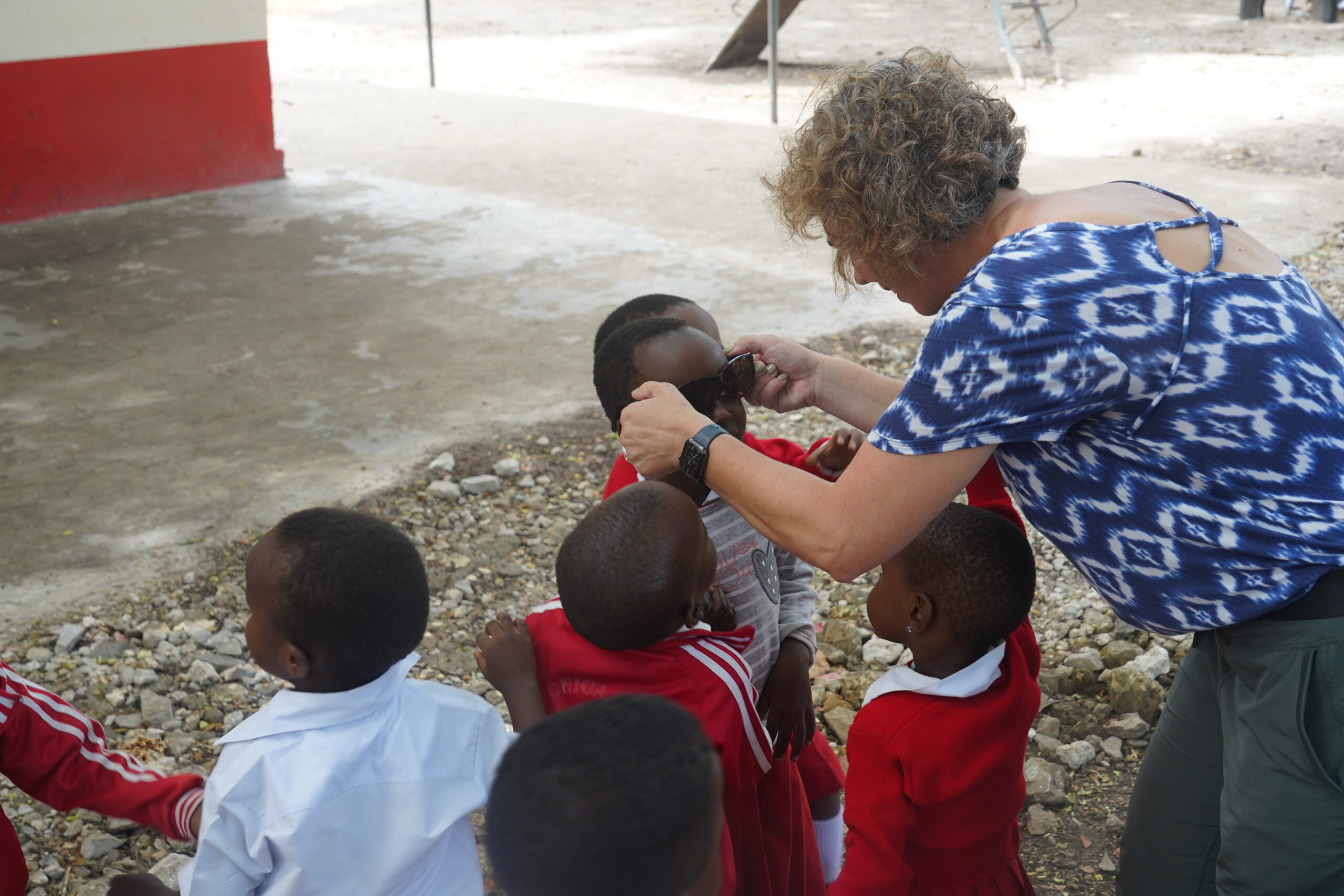





0 Comments